How to Sell Digital Products Online and Build Passive Income from Your Audience
Creating content online is one thing.
Turning that attention into a sustainable income stream is a completely different challenge.
You may have people watching your videos, reading your posts, replying to your stories, or asking for advice in your DMs. But unless there is a clear way for them to buy something from you, that attention rarely turns into meaningful revenue.
This is where digital products can make a real difference.
A digital product allows you to package your knowledge, skills, creative work, or experience into something people can purchase online. You build it once, make it available to your audience, and sell the same product repeatedly without having to manually deliver it every time.
It is not effortless income. You still need to create something valuable, build trust, and promote it consistently.
But unlike client work, consultations, or services, your income is no longer limited by the number of hours you can work in a day.
What is a digital product?
Build it once, sell it repeatedly
A digital product is something people can purchase and access online.
Unlike a physical product, it does not need inventory, packaging, shipping, or a delivery partner. After someone completes the payment, the product can be delivered digitally.
The biggest advantage is simple: the same file, resource, or course can be sold multiple times.
A fitness coach can create a 30-day beginner workout plan and sell it to hundreds of people.
A designer can create a social media template bundle and sell it repeatedly.
A freelancer can turn their proposal format, onboarding checklist, or workflow into a downloadable resource.
A musician can sell beats, sample packs, or exclusive audio files directly to an audience.
The product does not need to be complicated. It needs to solve a specific problem.
Why digital products can become a strong income stream
Create once, deliver again and again
Most income models depend directly on your time.
| Income model | How you get paid | Main limitation |
|---|---|---|
| Freelancer | After completing a project | Limited by available hours |
| Consultant | For a meeting | Limited by available hours |
| Coach | Individual sessions | Limited by available hours |
| Small business | After fulfilling an order | Limited by fulfilment capacity |
| Digital products | Repeated sales of the same product | Not rebuilt for every customer |
Digital products work differently.
You still invest time upfront to create the product. But after the product is ready, one additional sale does not necessarily require one additional hour of work.
That creates leverage.
You can sell the same product to ten people, one hundred people, or one thousand people without recreating it from scratch each time.
Digital products also come with a few practical advantages:
- You do not need physical inventory.
- You can sell to people in different locations.
- Your delivery process can be automated.
- You can start with a relatively small budget.
- You can continue selling alongside a full-time job or service business.
- You can improve the product over time based on customer feedback.
However, it is important to be realistic.
Digital products are not automatically passive income.
A product will not sell simply because you uploaded a PDF and added a payment link. People still need to discover it, trust the person selling it, and understand why it is useful.
A better way to think about digital products is scalable income.
The product can keep earning without being rebuilt for every customer, but the audience and marketing still need attention.
Who can sell digital products?
Digital products are not limited to influencers or full-time content creators.
Anyone with useful knowledge, experience, a repeatable process, or a creative skill can build a product around it.
| Role | Digital product idea |
|---|---|
| Teacher | Revision notes or study guides |
| Developer | Interview preparation resources, code templates, or project starter kits |
| Recruiter | Resume templates or job-search checklists |
| Wedding planner | Planning spreadsheets |
| Nutrition coach | Beginner meal plans |
| Finance creator | Budgeting templates |
| Photographer | Editing presets |
| Small business owner | Downloadable resources related to their niche |
| Consultant | Workbooks or toolkits built from a repeated process |
You do not need millions of followers.
A smaller audience with a clear problem can be far more valuable than a large audience with no specific reason to buy.
How to find a digital product idea people will pay for
Your audience is already telling you what to build
The strongest product ideas usually come from problems you already understand well.
For example, imagine you regularly create content about job interviews.
Your audience may repeatedly ask:
- How should I structure my resume?
- Which backend questions should I prepare?
- How should I introduce myself during interviews?
- How can I track job applications?
- What should I revise before a coding round?
Instead of answering the same questions individually, you could package the answers into a practical interview toolkit.
That toolkit might include a preparation guide, a checklist, sample answers, a tracker, and a short video walkthrough.
The best digital products are often not broad.
“Learn software development” is too wide.
“Laravel backend interview preparation checklist for developers with two to five years of experience” is much clearer.
Specific products are easier to explain, easier to promote, and easier for the right customer to understand.
Popular digital product ideas
Different audiences need different products, but the following formats are practical starting points.
| Format | Best when | Example products |
|---|---|---|
| Guides and e-books | Your audience needs clear steps to solve a problem | Personal branding guide, home bakery launch guide, relocation checklist |
| Templates | People need a shortcut to get started quickly | Resume templates, Notion dashboards, budget trackers, pitch decks |
| Recorded workshops and mini-courses | Customers want a practical outcome | Portfolio website workshop, freelancing starter course, Instagram content strategy |
| Creative assets | Others need resources to create more effectively | Lightroom presets, beat packs, Canva templates, illustration bundles |
| Business resources | Professionals want systems they can reuse | SOP templates, client onboarding checklists, proposal documents, sales trackers |
A useful guide does not need to be hundreds of pages long, and a course does not need fifty videos. A focused 20-page guide or a short workshop that solves one real problem can be more valuable than a large product filled with generic information.
A practical tool that saves someone two hours every week can be worth more than a long theoretical guide.
How to create your first digital product
Useful beats perfect for a first product
Your first product does not need to be perfect.
It needs to be useful.
Start by defining one clear outcome.
Ask yourself:
What should the customer be able to do after using this product?
“Create a professional resume in one hour” or “plan meals for an entire week” are outcomes. Once the outcome is clear, choose the simplest format that helps someone achieve it — a PDF, a spreadsheet, a short video walkthrough, or a small toolkit of files.
Avoid adding unnecessary complexity just to make the product feel bigger. Customers care more about clarity, convenience, and results than the number of pages or videos.
Before launching, ask a few people to test the product. Observe where they get confused, ask which parts feel useful, and fix anything that creates friction. A small amount of feedback before launch can make the final product much stronger.
How to price your digital product
One product, four pricing layers
Pricing can feel difficult because digital products do not have a simple formula.
A 10-page resource might be extremely useful.
A 100-page e-book might not solve anything clearly.
Price should reflect the value of the outcome, not only the amount of content.
Ask yourself:
- How much time does the product save?
- How difficult is the problem to solve without it?
- Does it help the customer earn money, improve a skill, or avoid mistakes?
- Are similar products already available?
- Is this an entry-level product or a premium resource?
Starting with a lower-priced product can be useful when you are testing demand.
Once you understand what customers value, you can improve the product, add bonuses, create bundles, and adjust the pricing.
Where to sell digital products online
Remove friction between attention and purchase
You do not necessarily need a complicated website to start selling digital products.
In many cases, your audience already discovers you through Instagram, YouTube, LinkedIn, TikTok, WhatsApp, or another social platform.
This journey — from discovering your content to completing a purchase — should be as simple as possible.
Every extra step creates another chance for the buyer to leave.
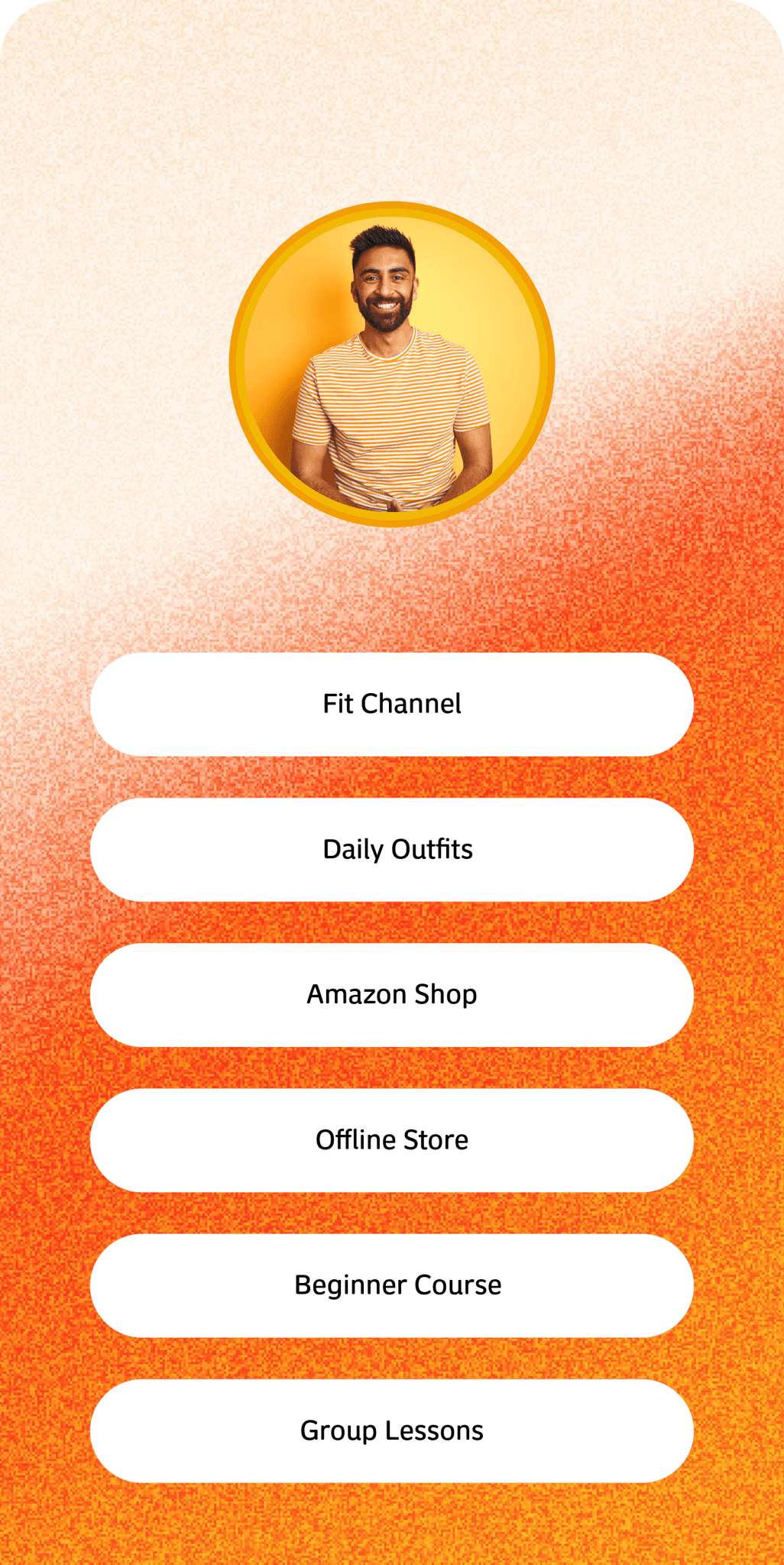
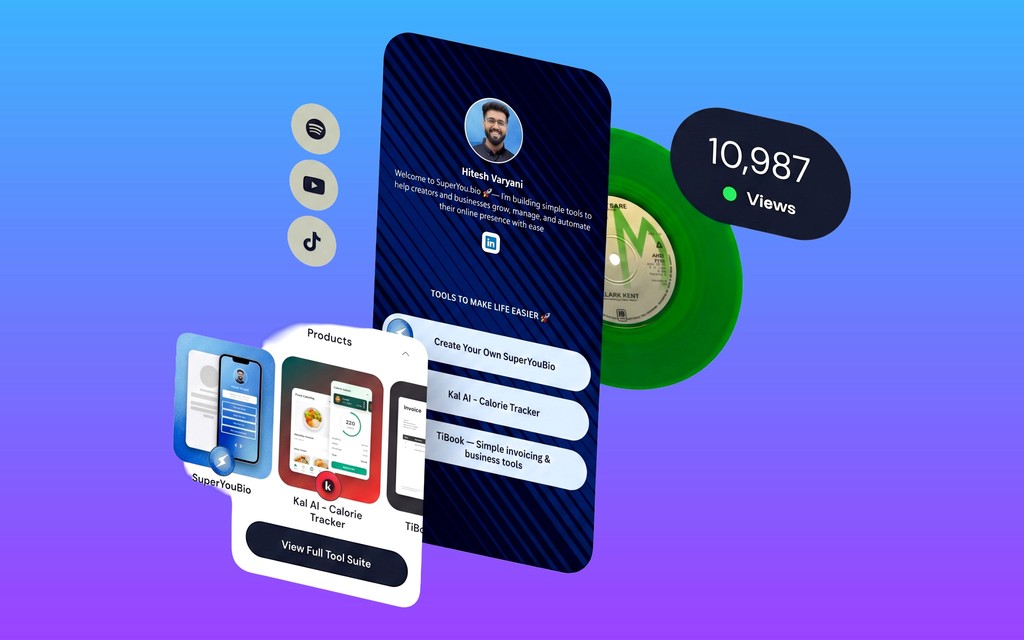
A creator page can help bring your products, social links, booking options, forms, and important content into one place.
Instead of sending people to multiple platforms, you can direct your audience to one page that represents your work and makes the next step obvious.
How to grow an audience that buys from you
Free content earns the sale before you ask for it
A digital product becomes easier to sell when your content already builds trust around the topic.
People rarely buy from someone after seeing one random post.
They buy after repeatedly seeing useful content, relatable experiences, clear ideas, and proof that the person understands their problem.
Create content around the problem
Your free content should help people understand the problem your paid product solves.
For example, imagine you sell a meal-planning guide.
Your free content could include:
- Simple grocery-shopping tips
- Common meal-preparation mistakes
- Budget-friendly recipes
- How to add more protein to a vegetarian diet
- How to plan weekday meals in advance
The free content creates trust.
The paid product helps people go deeper and apply the advice more easily.
Use your audience’s questions as content ideas
Your comments and DMs can tell you exactly what people want to learn.
When several people ask the same question, it is usually worth turning the answer into a post, reel, video, or blog.
Those repeated questions can also reveal your next digital product opportunity.
Build an email list
Social media platforms are useful for discovery, but reach can change.
An email list gives you a more direct way to stay connected with people who are genuinely interested in your work.
A free checklist, mini guide, template, or downloadable resource can encourage people to subscribe.
Later, you can share useful advice, announce new products, offer limited-time bundles, or invite your audience to workshops.
Stay consistent
Trust is built over time.
You do not need to post every hour or aggressively sell in every piece of content.
But people should regularly see what you do, what you understand, and how your product can help them.
Consistency makes your offer familiar.
Familiarity makes the buying decision easier.
How to promote your digital products consistently
Ten ways to keep your product in front of people
Many people mention their product once, do not see immediate sales, and assume the idea failed.
The reality is that most people in your audience will not notice every post.
Even those who notice the product may need time before purchasing.
Promotion works better when it becomes part of your regular content strategy.
For example, a creator could publish a reel saying:
Comment “GUIDE” and I’ll send you my complete content-planning toolkit.
Instead of manually replying to every person, an Instagram automation can send the product link directly through DM.
That reduces friction and turns content engagement into a clear buying opportunity.
What to measure and improve
You do not need an advanced analytics dashboard to start learning from your audience.
Pay attention to simple signals:
| Signal | What it can tell you |
|---|---|
| Profile visits | Which content brings people to your page |
| Link clicks | Which offers attract the most interest |
| Product interest | Which products people explore most |
| Comments and DMs | Which posts spark conversation |
| Repeated questions | What your next product or content should cover |
| Drop-offs before purchase | Where your offer page or pricing needs work |
| Products sold together | Which bundles may perform well |
These signals can help you improve your product page, pricing, content, and promotional strategy.
For example, you may discover that people click on your product but do not purchase.
That could mean the offer needs a clearer description, better previews, a stronger explanation of the outcome, or a different price.
You may also discover that one free resource receives strong interest. That could be a sign that your next paid product should explore that topic in more depth.
How SuperYouBio helps you sell directly to your audience
Replace a patchwork of subscriptions with one page
Everything you offer, one link in your bio
Your audience should not have to jump between multiple platforms to understand what you offer.
SuperYou gives you a space where your content, links, digital products, forms, and monetization options can come together.
You can create a page that feels like your digital storefront.
Someone can discover you on social media, visit your SuperYou page, explore your work, and take the next step without unnecessary confusion.
This is especially useful for creators, freelancers, coaches, consultants, and small businesses that want to monetize an audience without building a full website from scratch.
Your audience is already paying attention.
SuperYou helps you turn that attention into action.
Final thoughts
Digital products are not a shortcut to overnight income.
But they are one of the most practical ways to turn your experience, skills, and creativity into something scalable.
Start with one specific problem.
Create a useful product.
Keep the buying journey simple.
Build trust through consistent content.
Listen closely to your audience.
Then improve as you learn.
You do not need to launch a massive course or build a complicated website on day one.
Sometimes, your first digital product can be a simple guide, template, checklist, or toolkit that solves one problem exceptionally well.
Create something useful once.
Share it with the right audience.
And give it the opportunity to keep working for you long after you publish it.
Start selling your digital products with SuperYouBio
Create your SuperYou page, bring your audience into one place, and start turning your knowledge into a business.